Kitsap Tree Farm
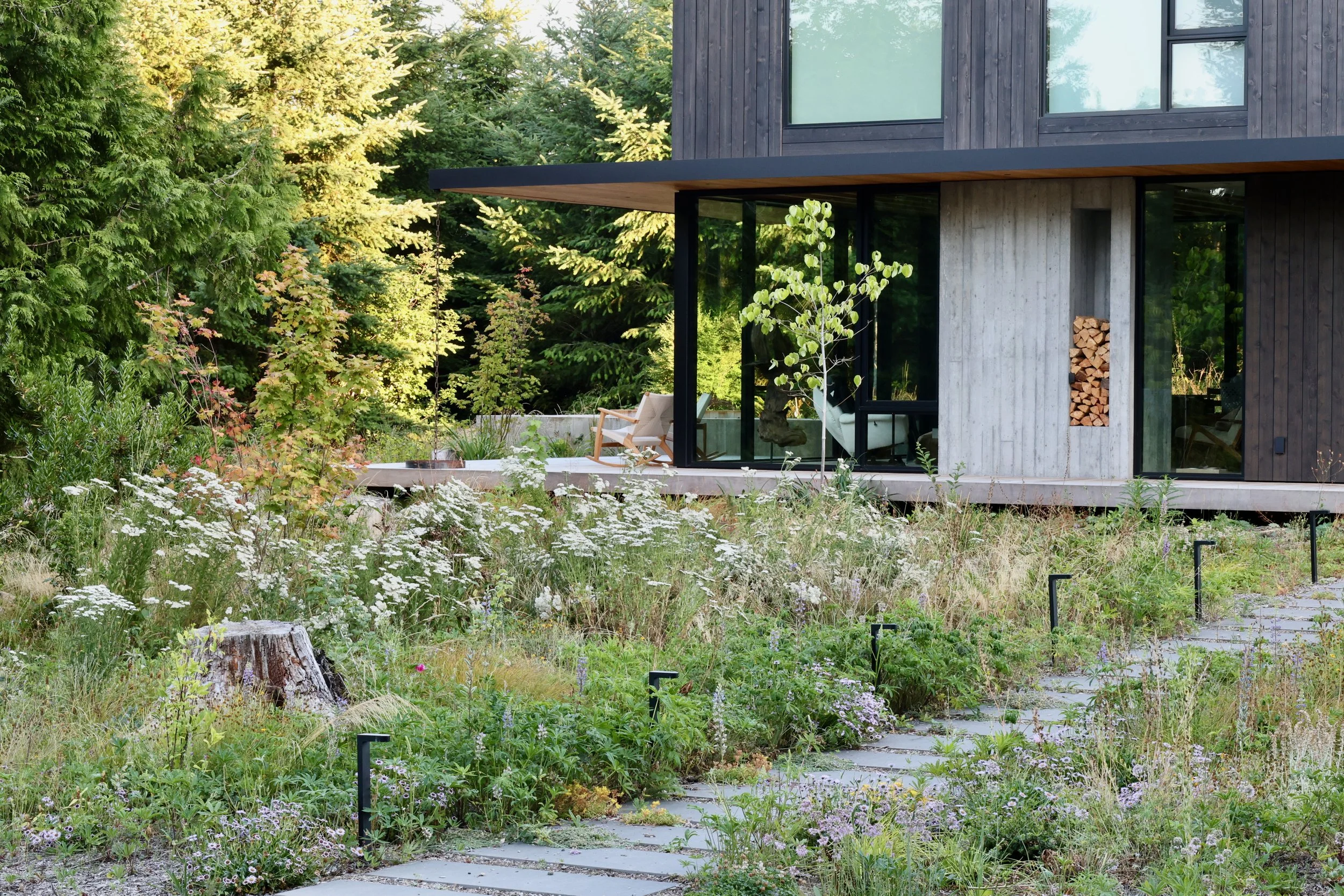
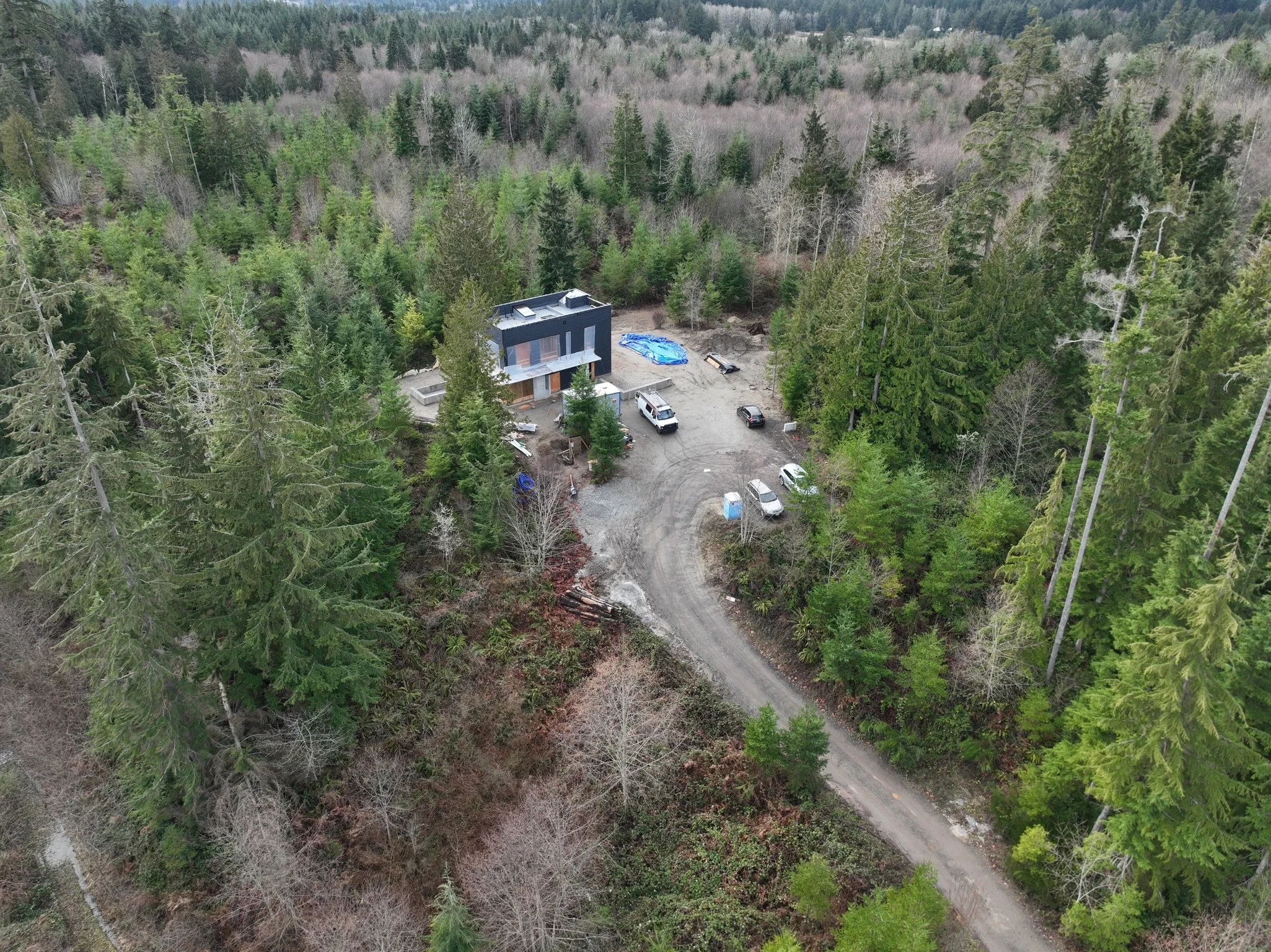
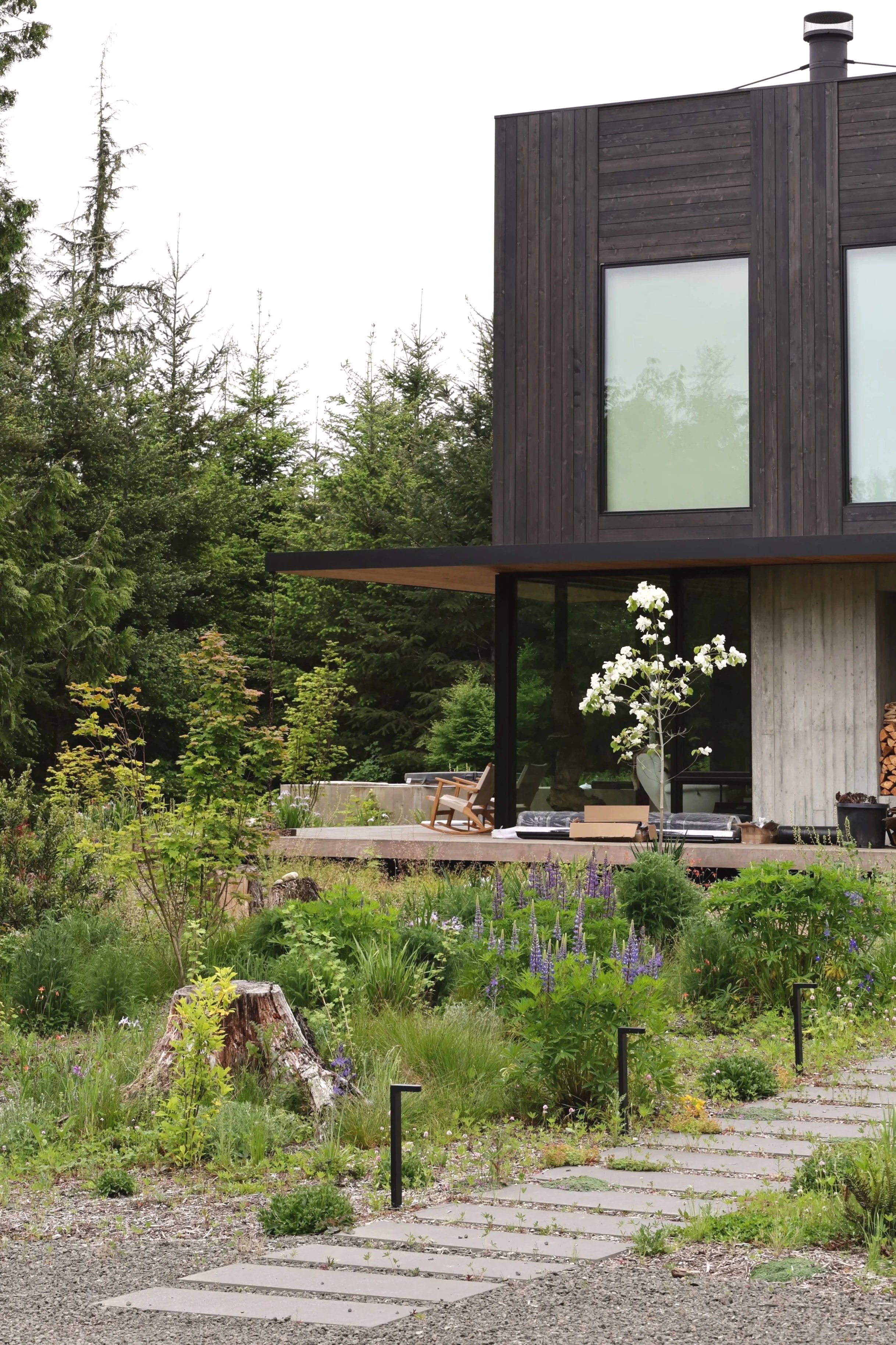
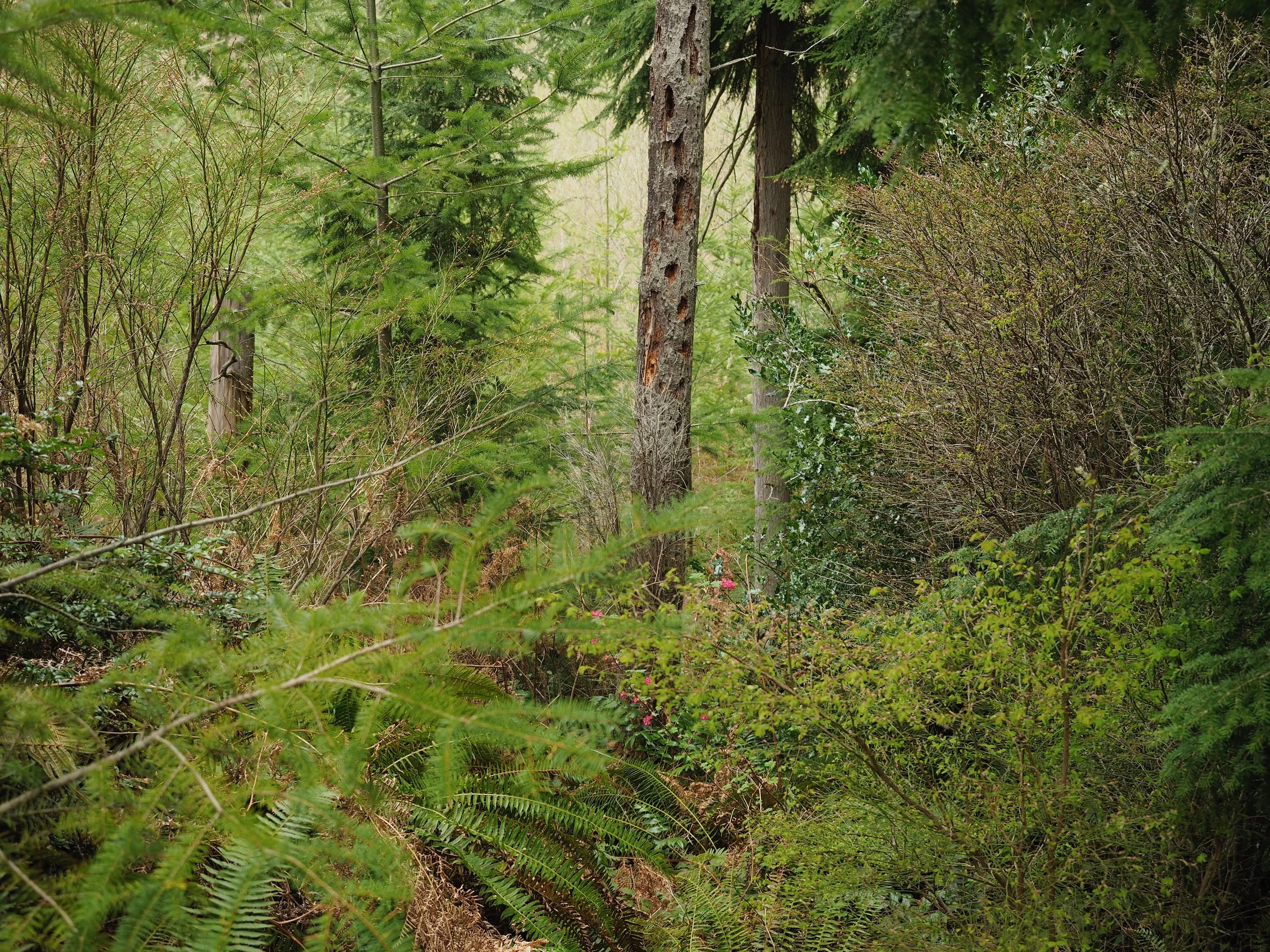
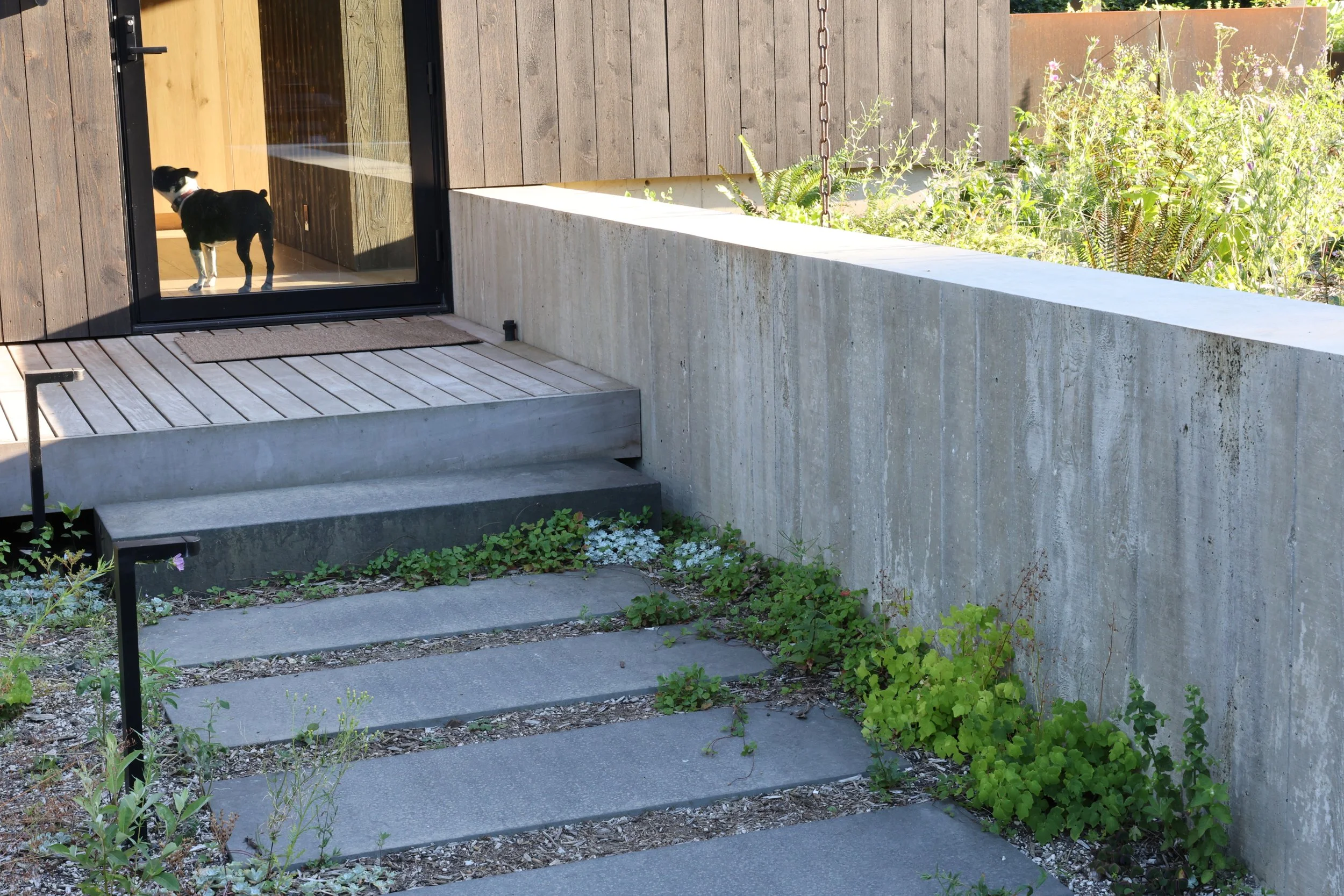
This was a collaboration with Drew Shawver Architecture + Studio DIAA, who designed the home. A property that had been clearcut maybe 20-30 years ago. It’s a young forest, with a new clearing for the house construction.
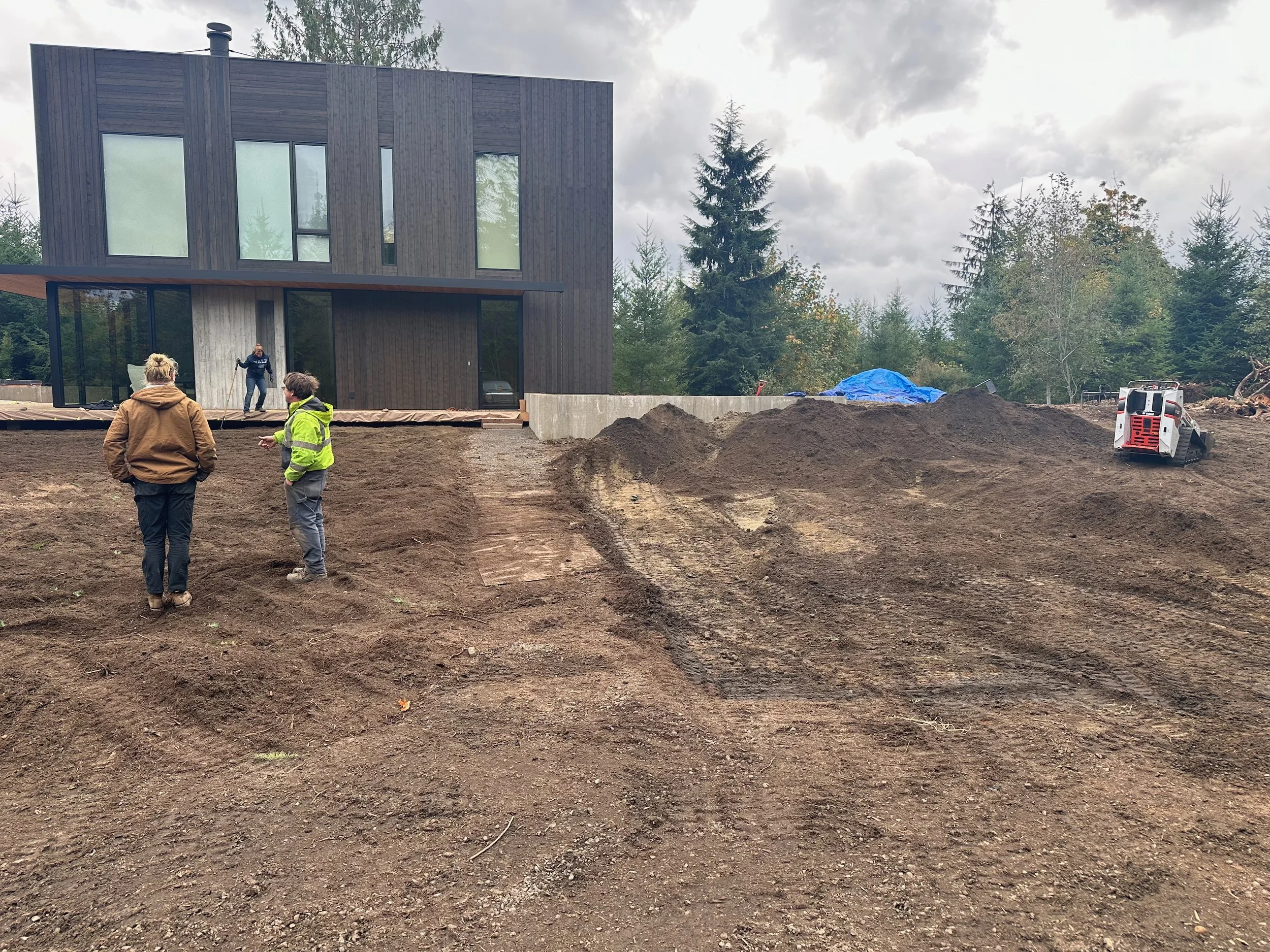
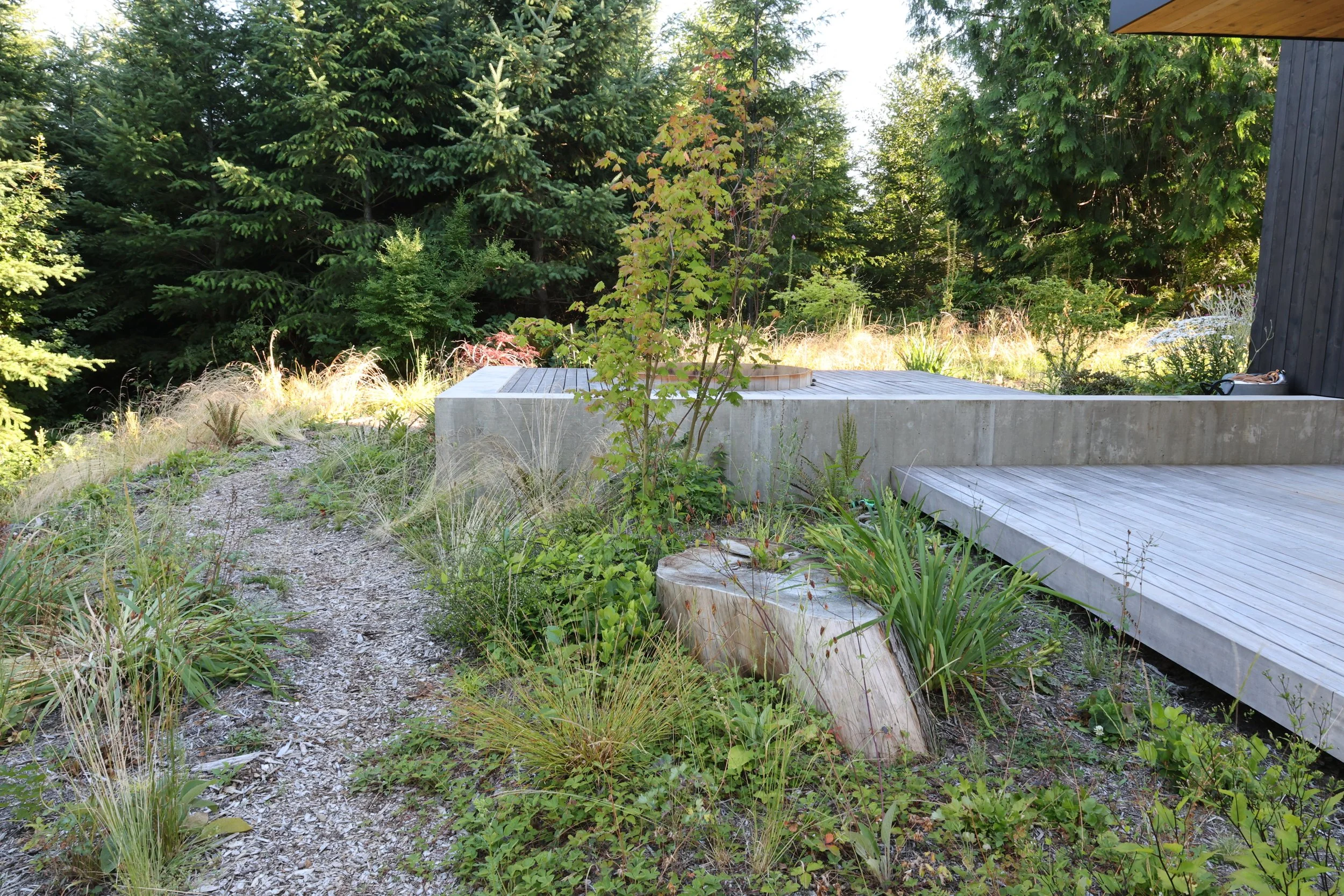
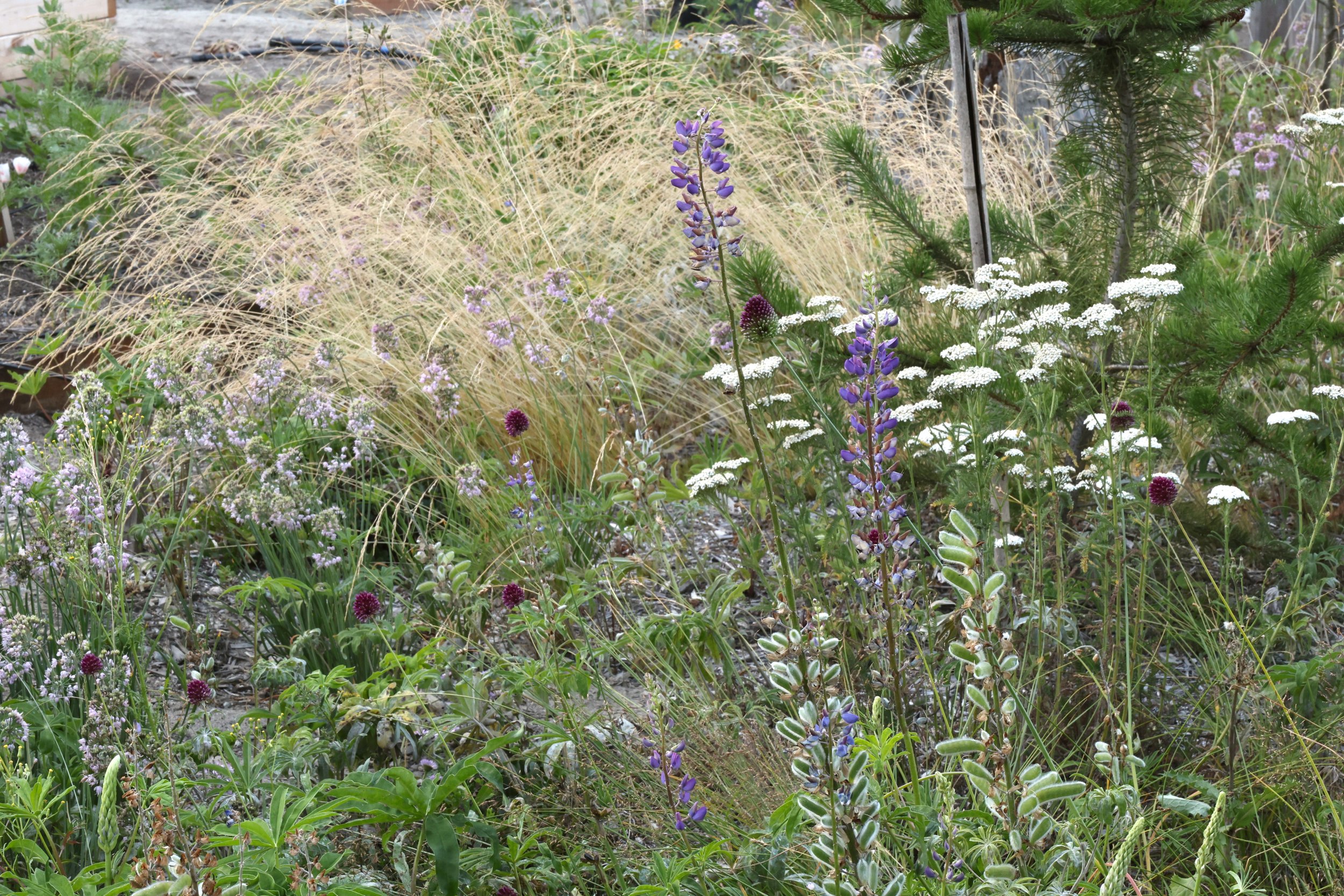
The goal for this garden was to knit the forest back together so that the house would feel like it's part of the forest again. We started out with poor sandy soil, needing to build it up over time to eventually make it cozy for the later succession species like sword ferns and douglas firs. It’s too raw and scary for those more tender forest plants right now.
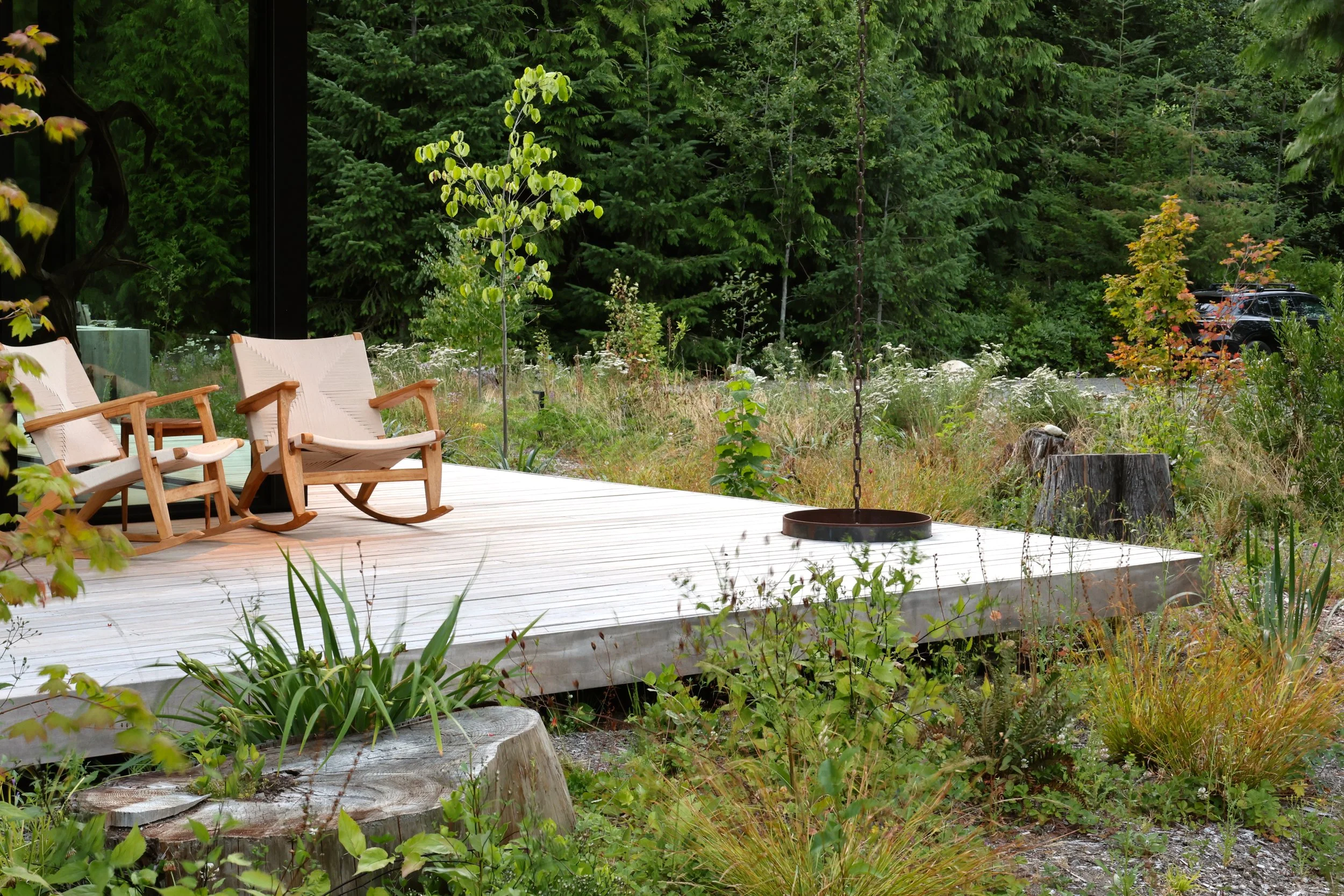
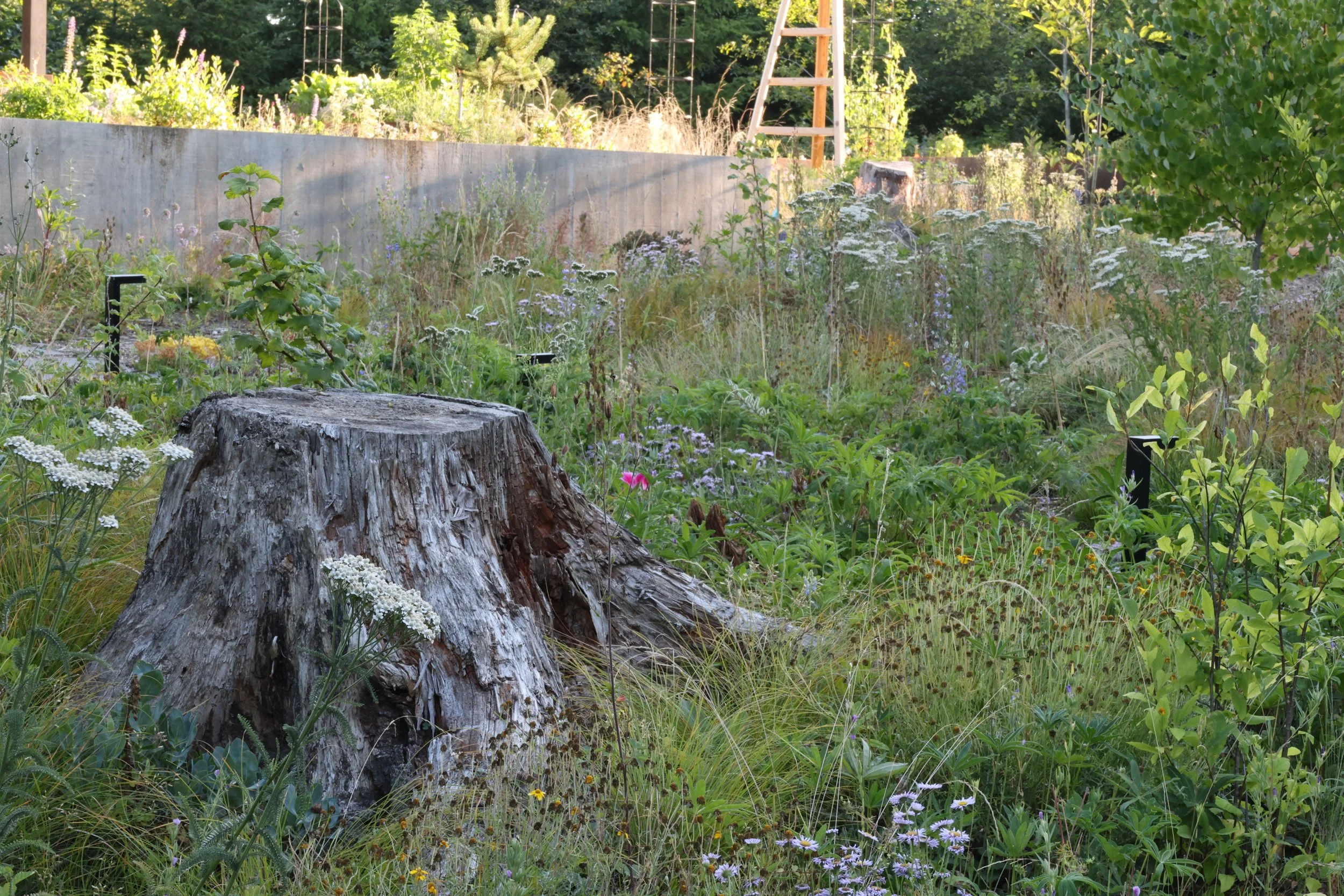
How we’ve begun the garden will look very different from how the garden looks after five, 10, 20, 30 years. We're letting it be a process, to knit the forest back together.
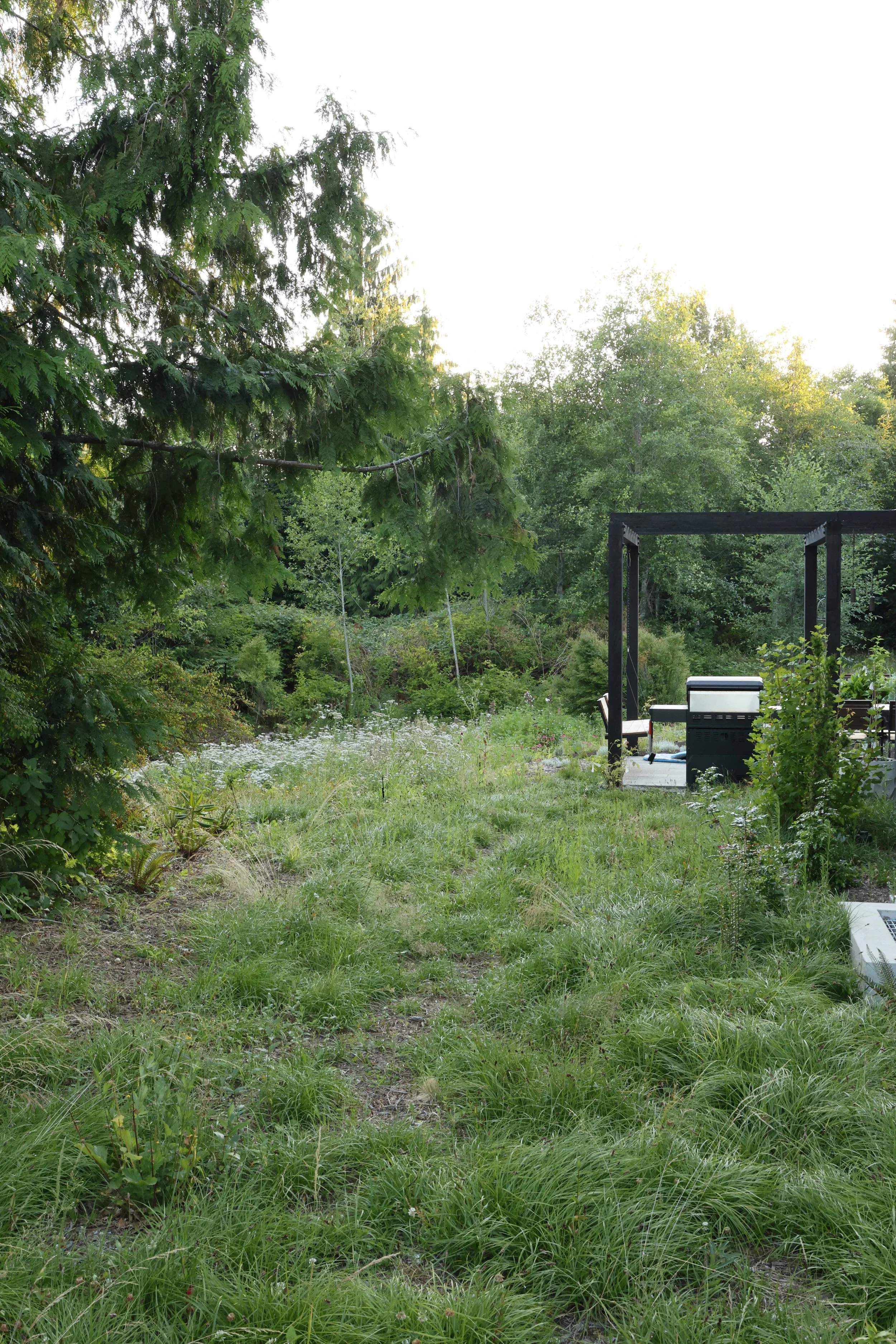
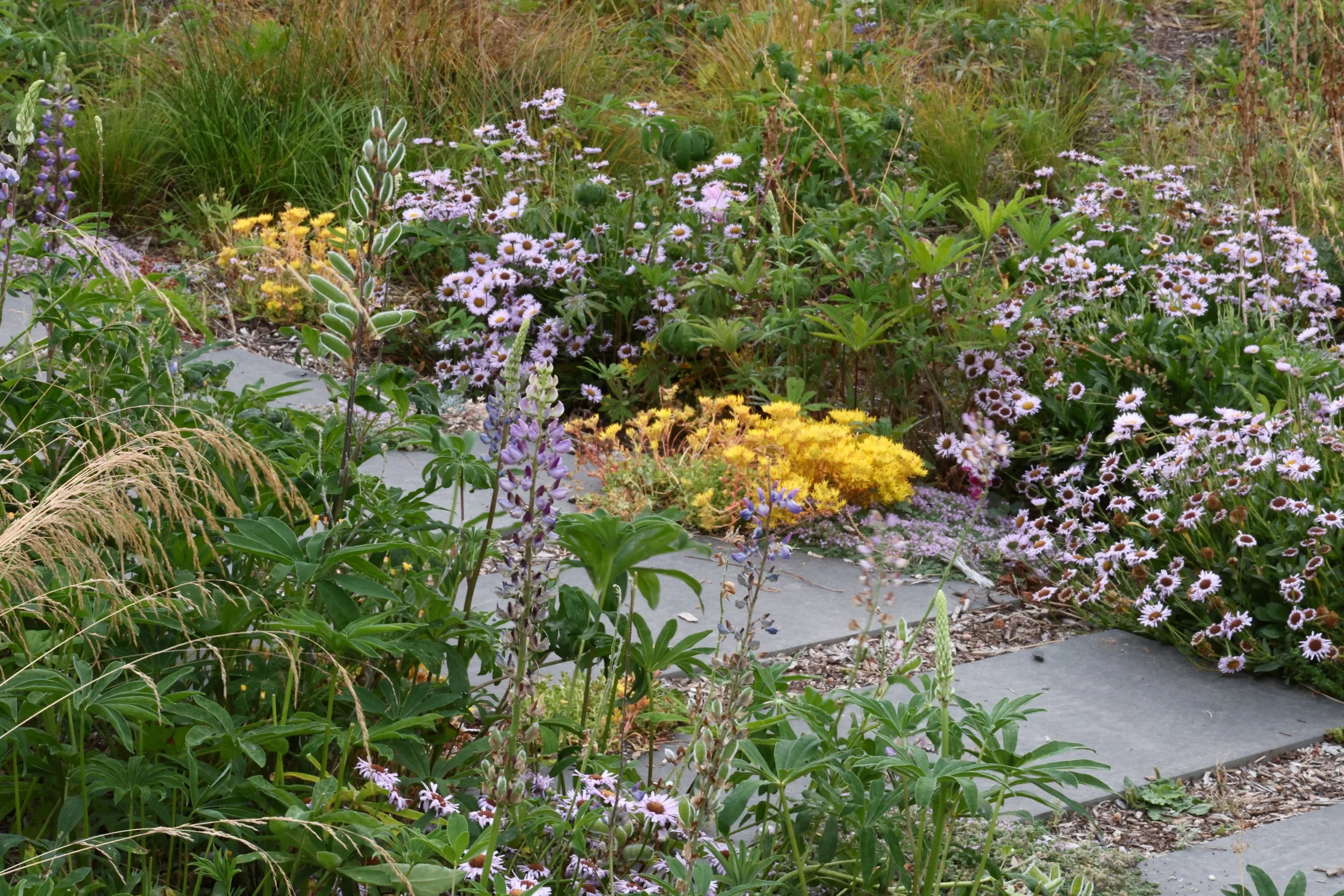
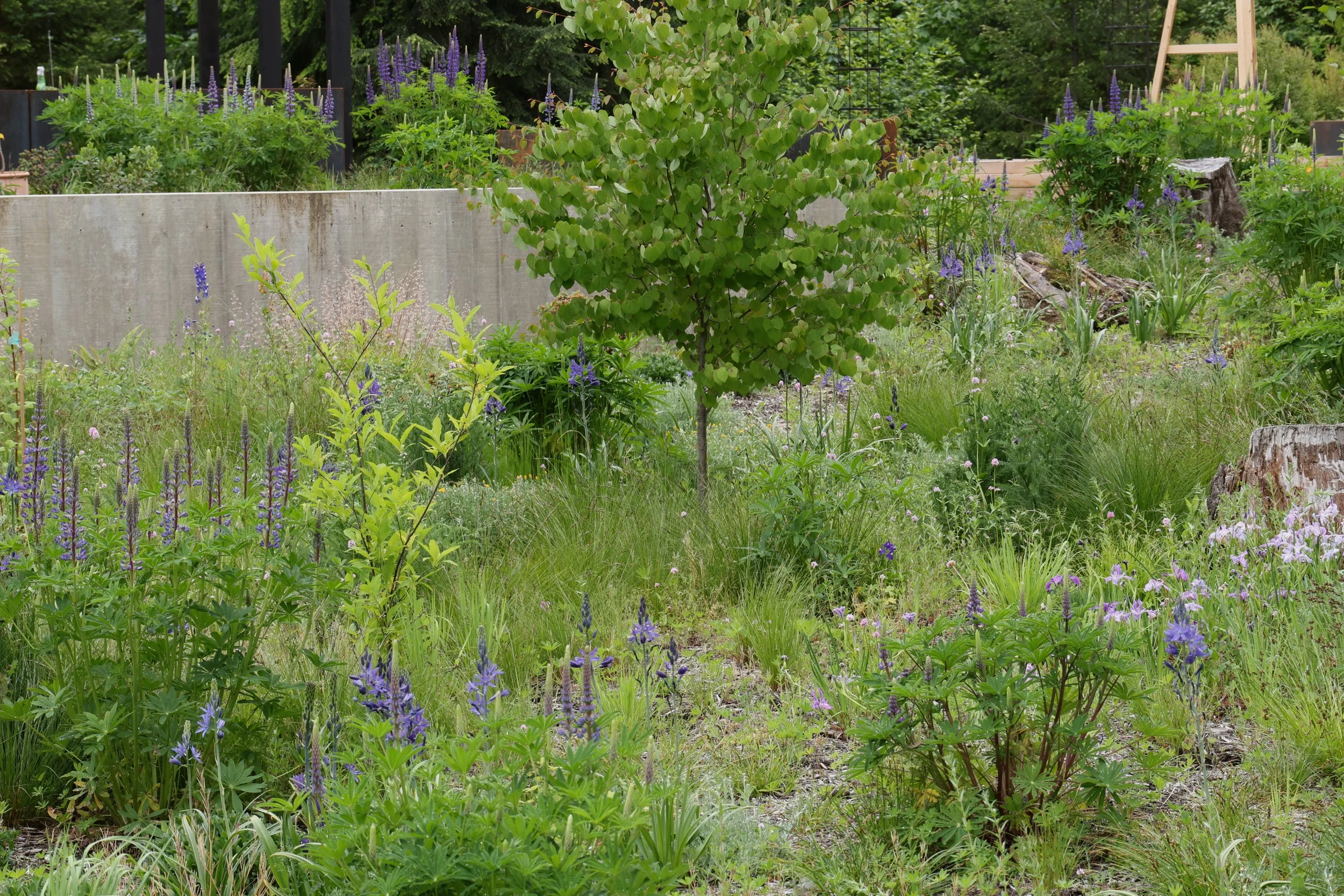
But the priorities are making it beautiful through that whole lengthy transformation, and letting it be easy, because it's a large piece of land, and it needs to be easy, and it needs to be able to defend itself against the Scotch broom and blackberry.
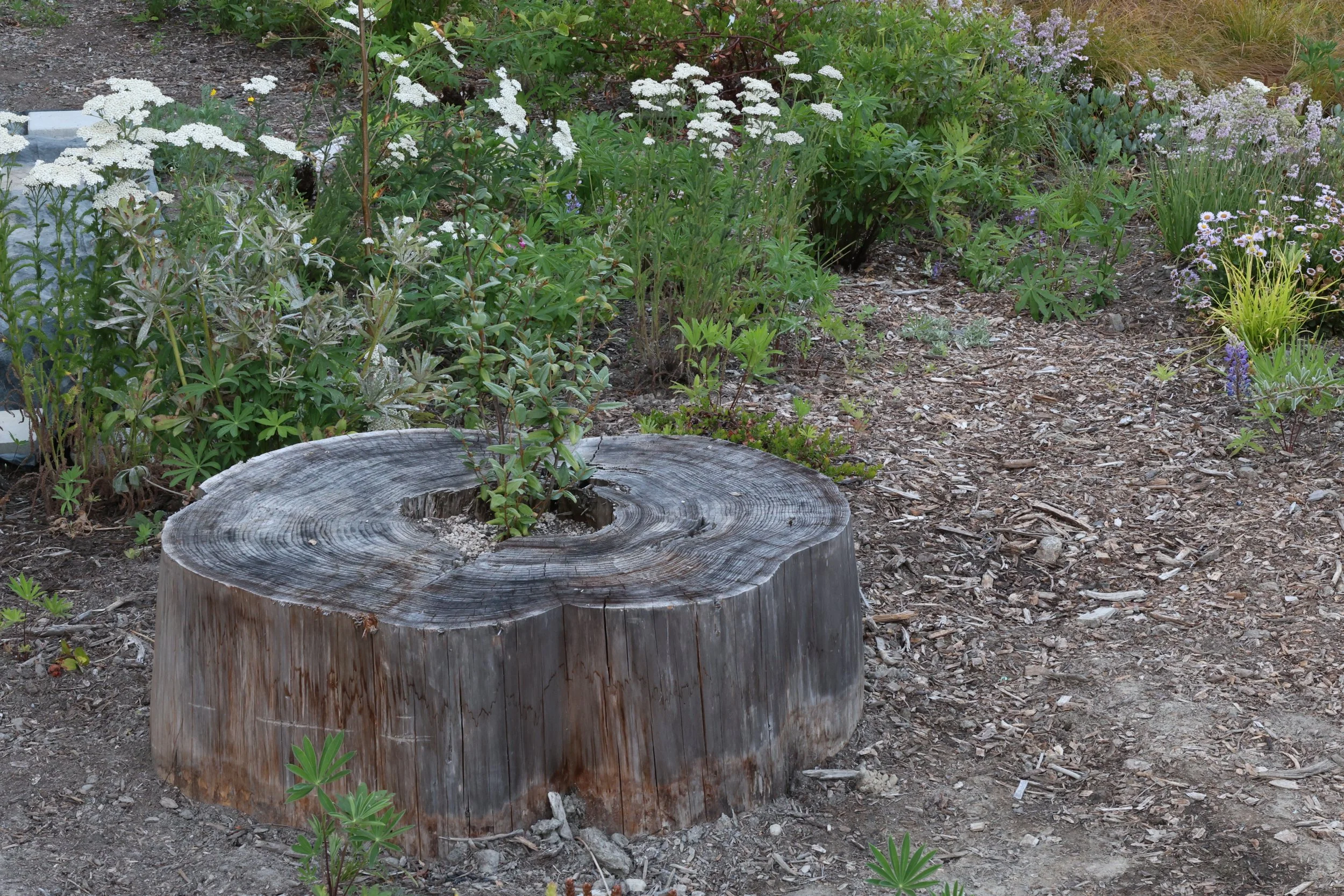
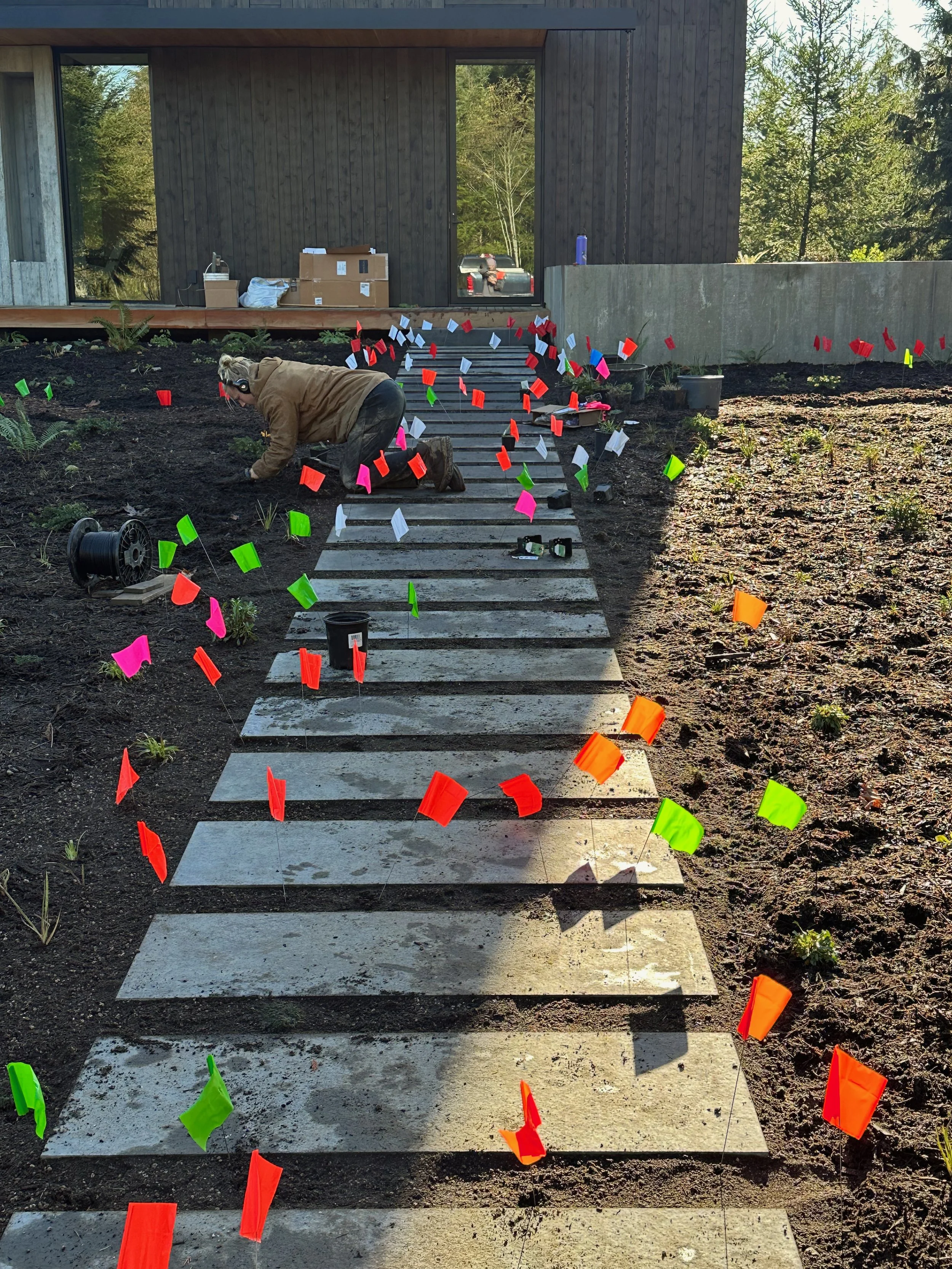
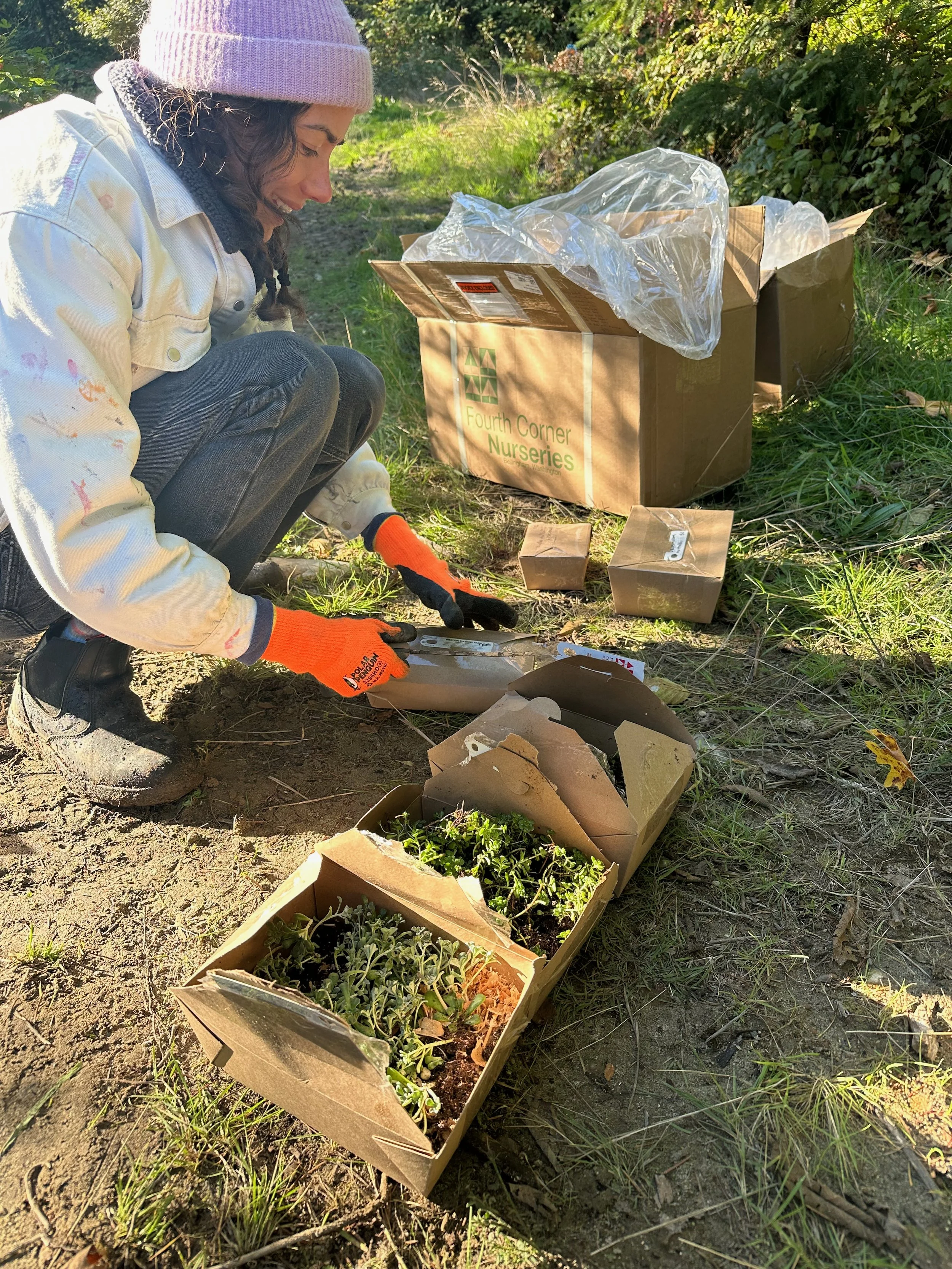
We started with very nutrient poor sand. Don, our landscape contractor (Yardvark Services), had his son build a custom, a custom mixy tool to not churn, but drag through the sand as a way to mix in a layer of compost and biochar that we put over the top. The garden was then mostly planted with bare roots to maximize efficiency and plant genetic diversity.
The goal right now is to make it look nice and to cover the ground so that there's less weeding to do and less fending off noxious weeds. And the idea is that over time, the adjacent forest, the sword ferns, the salal, these things can start to seed into, and spread into the garden as the soil gets enriched by the life happening in this kind of newly formed soil. So it's the idea that we're making it work now, making it beautiful now, but also letting it evolve over time, as these other plants move in, and as the soil gets more situated.
If we tried a traditional approach of planting the final picture right now, say, of firs, cedars, salal and ferns, it would be really hostile conditions and take a lot of water. The plant growth would be really slow and we would see a lot of emptiness for a long time before it started to look like something.
So this is a way of making it an easier, gentle transition that celebrates those changes, rather than trying to force something that's fairly hard.
Landscape Construction by
Architecture by Drew Shawver Architecture and Design
Photos by Jonathan Hallet