Magnuson Park Native Meadow
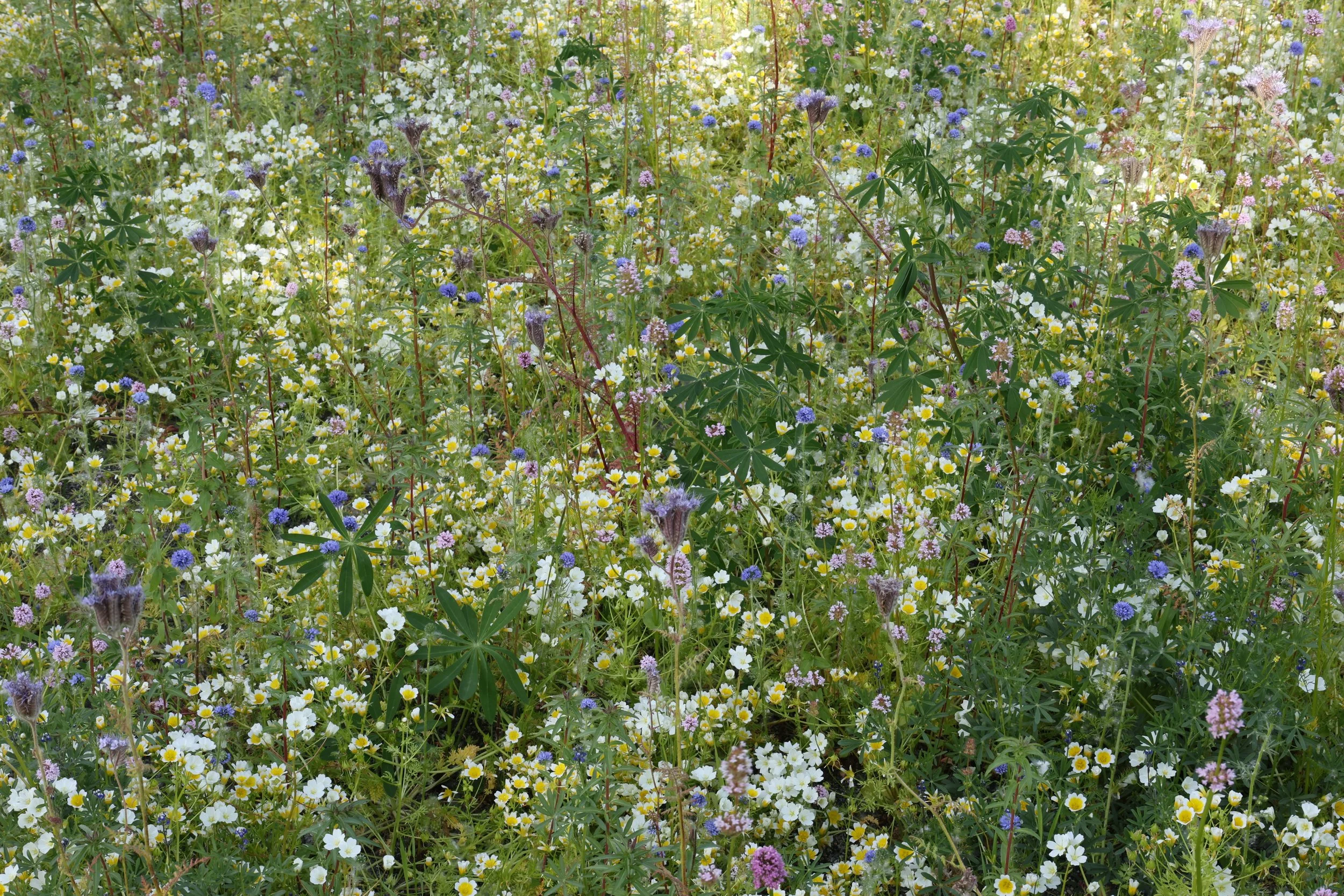
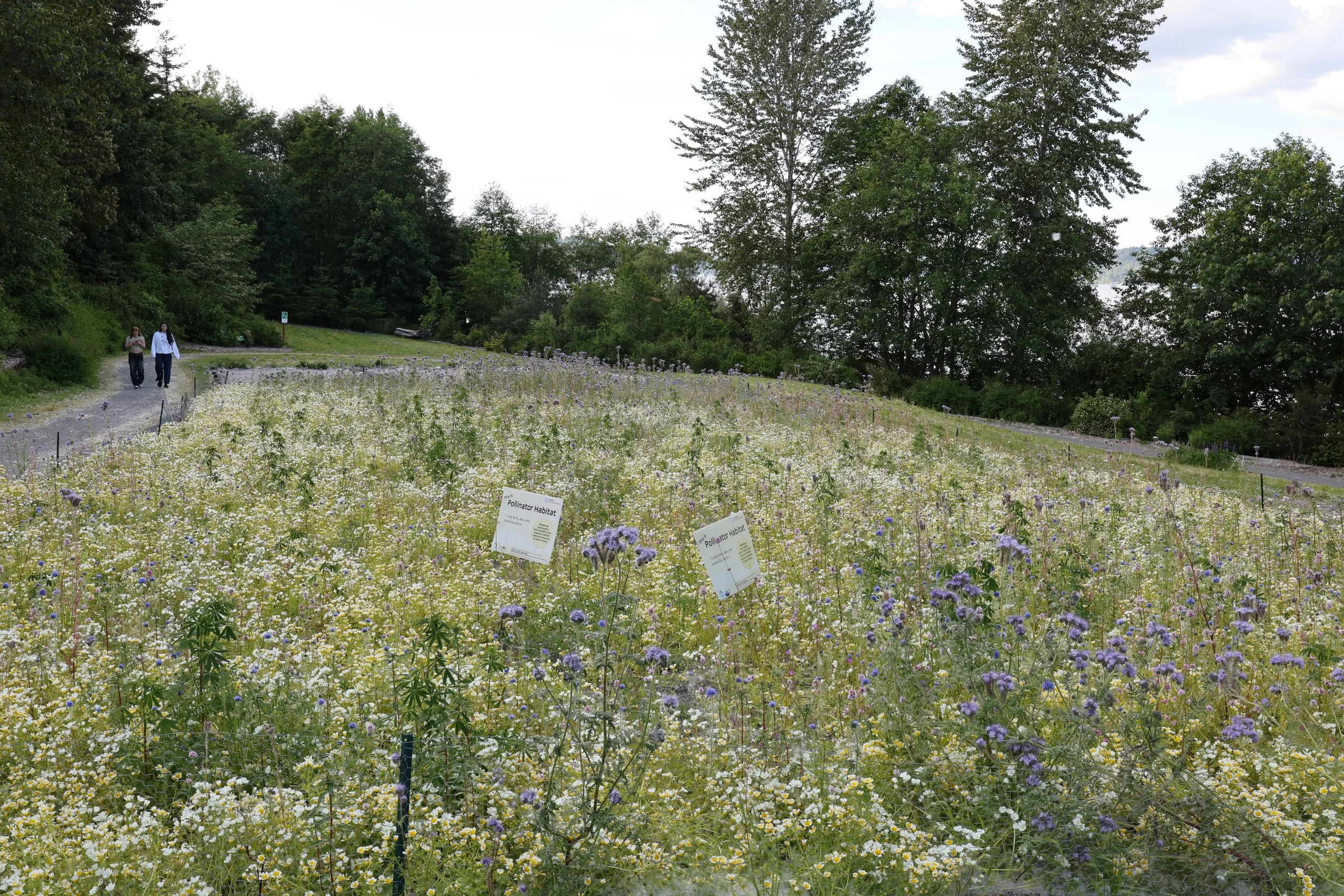
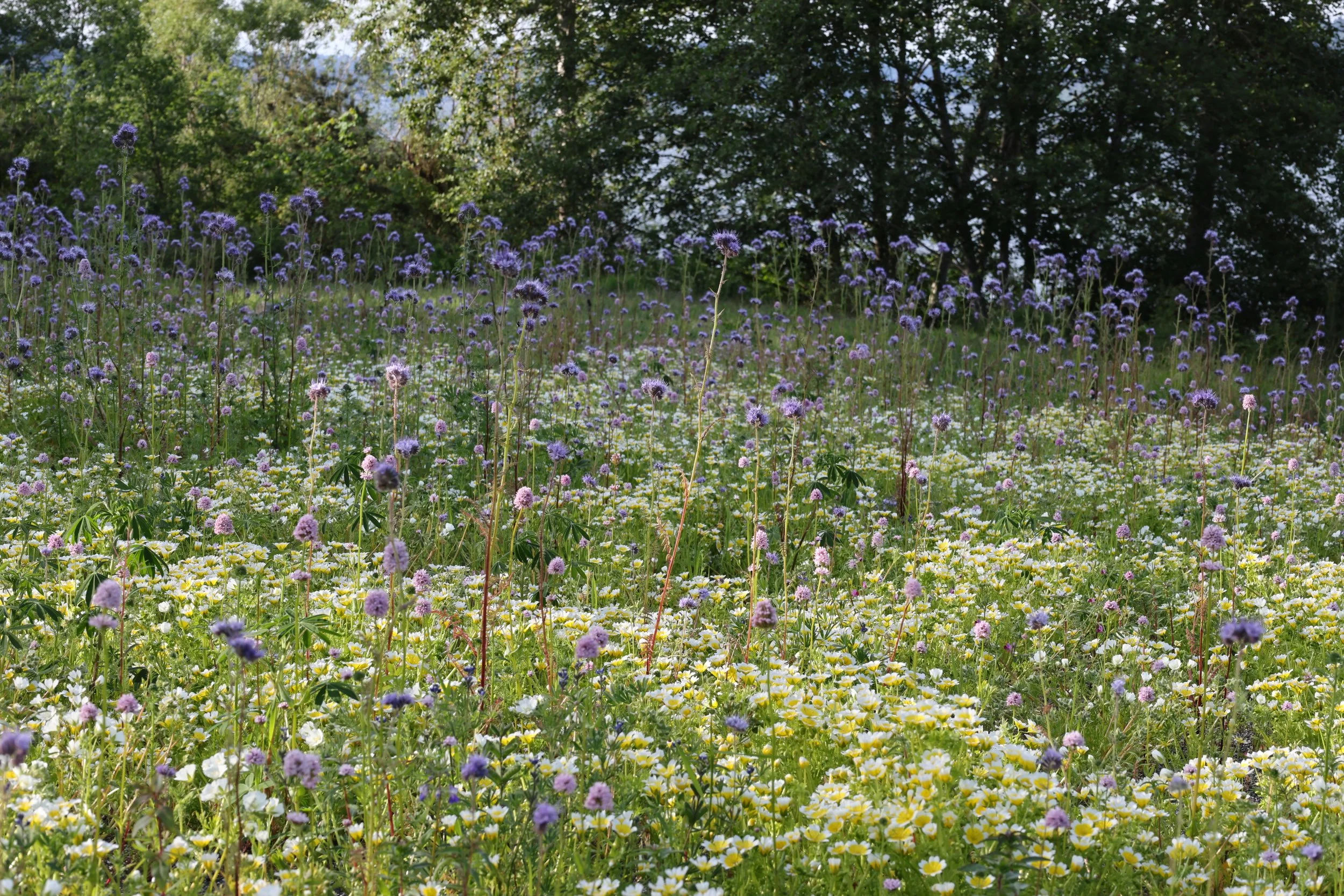
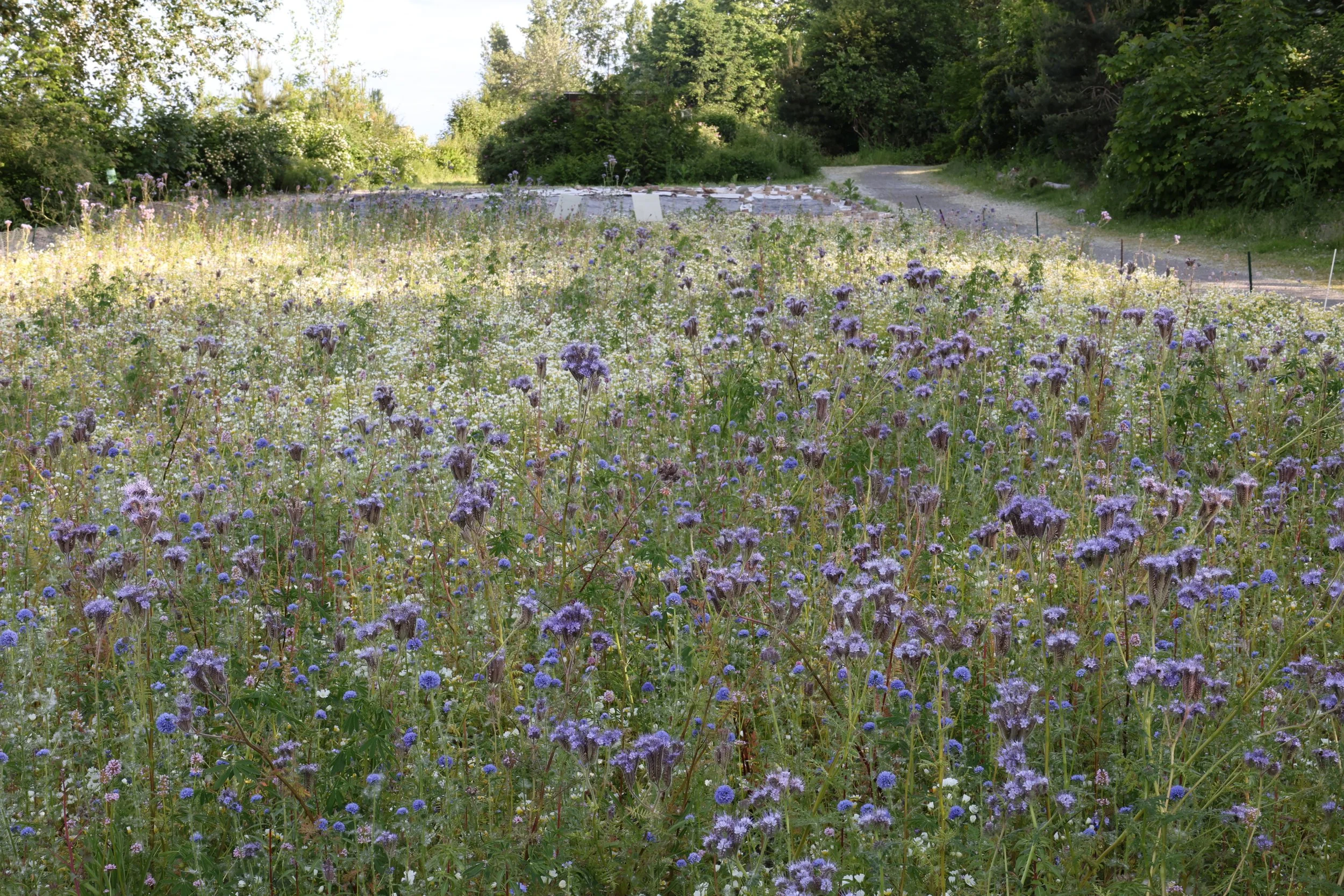
Ever since I moved to Seattle, I've been experimenting with meadow plantings. It’s fairly challenging to get right - because without the right preparation, you’re fighting with soooo many weeds. Yet they offer an exciting alternative to lawns - requiring little input, and creating real delight for people and a lot of resources for insects and birds
Meadows were an important ecotype of the Pacific Northwest. A lot of Seattle and Tacoma and Olympia was meadow. And the Salish peoples would manage the lands in ways that encouraged this kind of habitat because there was a lot of important food and medicine in the meadow plants. Salish tribes would frequently burn meadow areas to stop trees and shrubs from encroaching and starting a forest succession process. And now, without those practices, and generally with an attitude of fire suppression throughout, most meadows have either been developed because they're typically on nice flat ground with pretty nice soil – easy building, or have been reconsumed by forests.
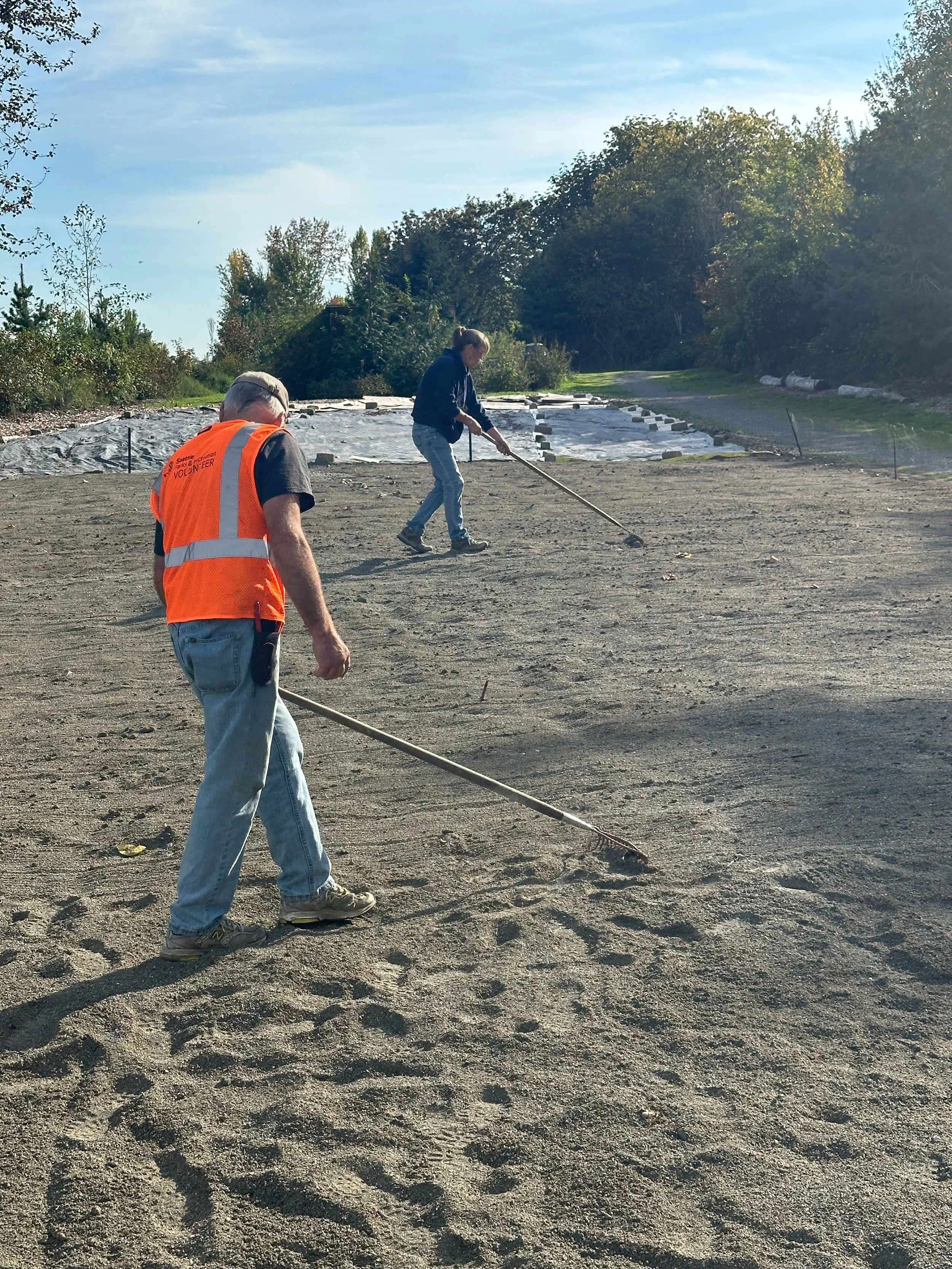
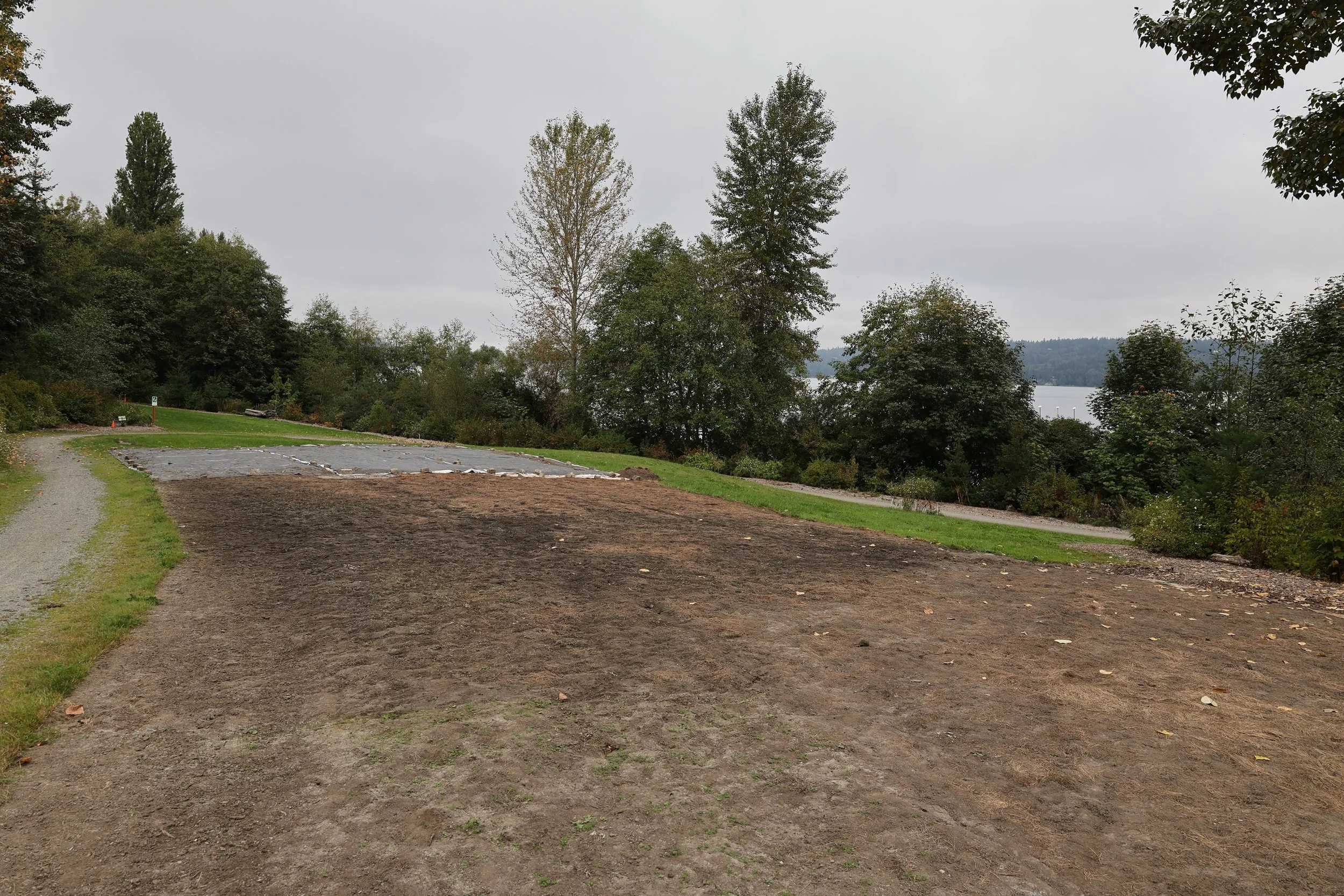
To create this meadow, we started out with.. lawn. We tarped the lawn for about two years with old billboard posters. We then put a thick layer of sand over the top before seeding. Dean is a crucial part of the ‘we’ - he’s done most of this physical work, including, unbagging hundreds and hundreds of salvaged bags of sand to use for the mulch layer (a la James Hitchmough method).
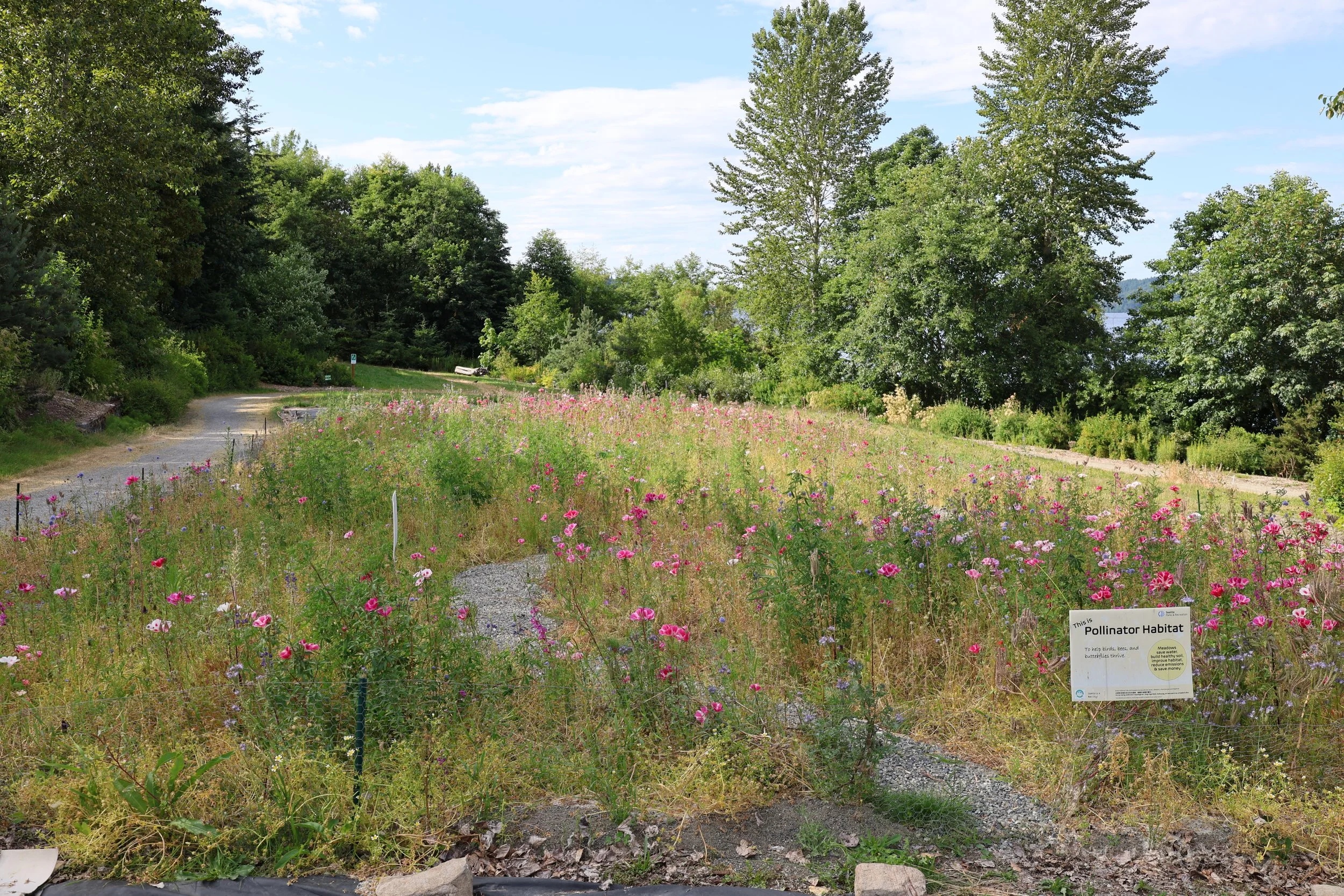
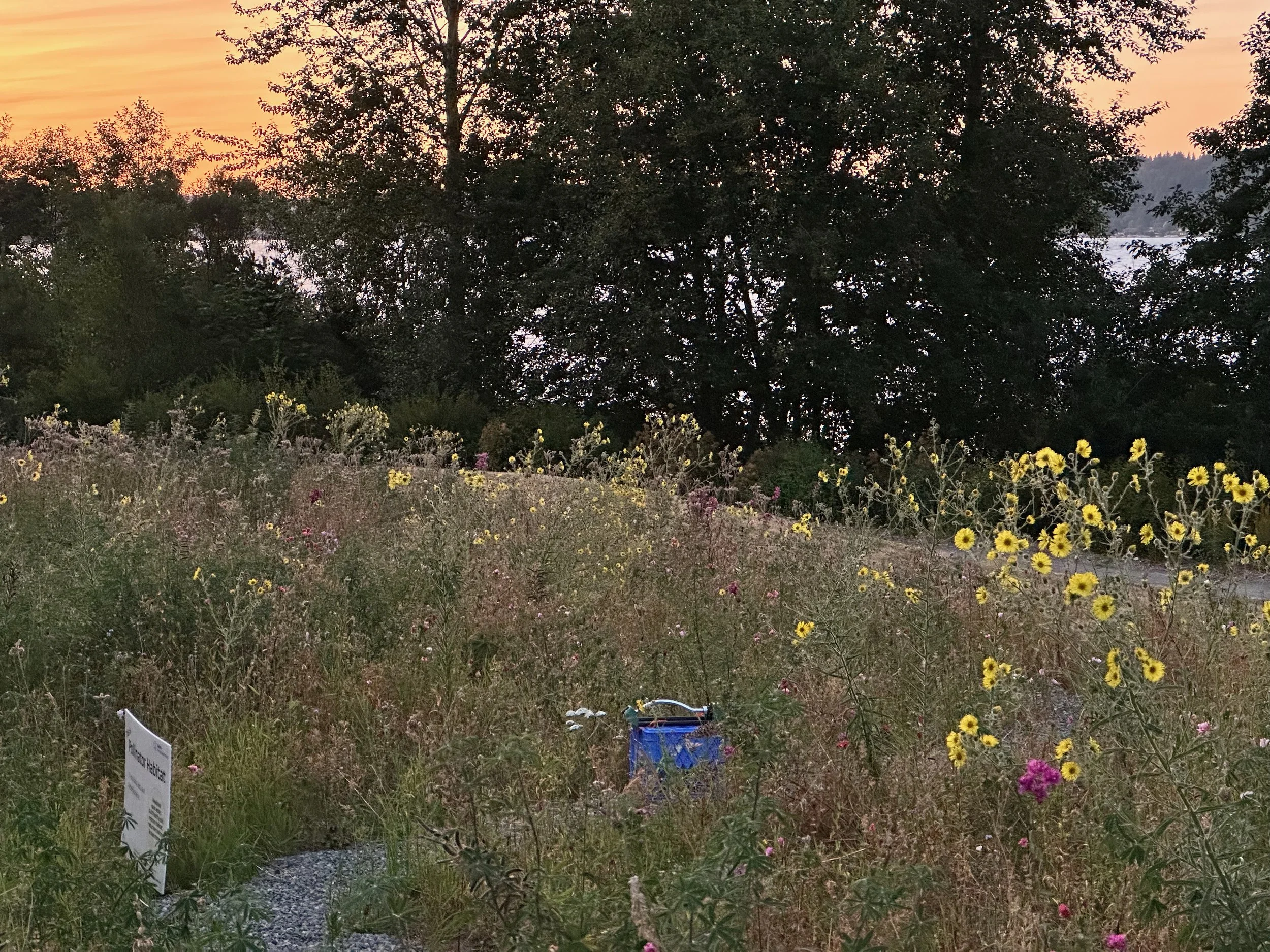
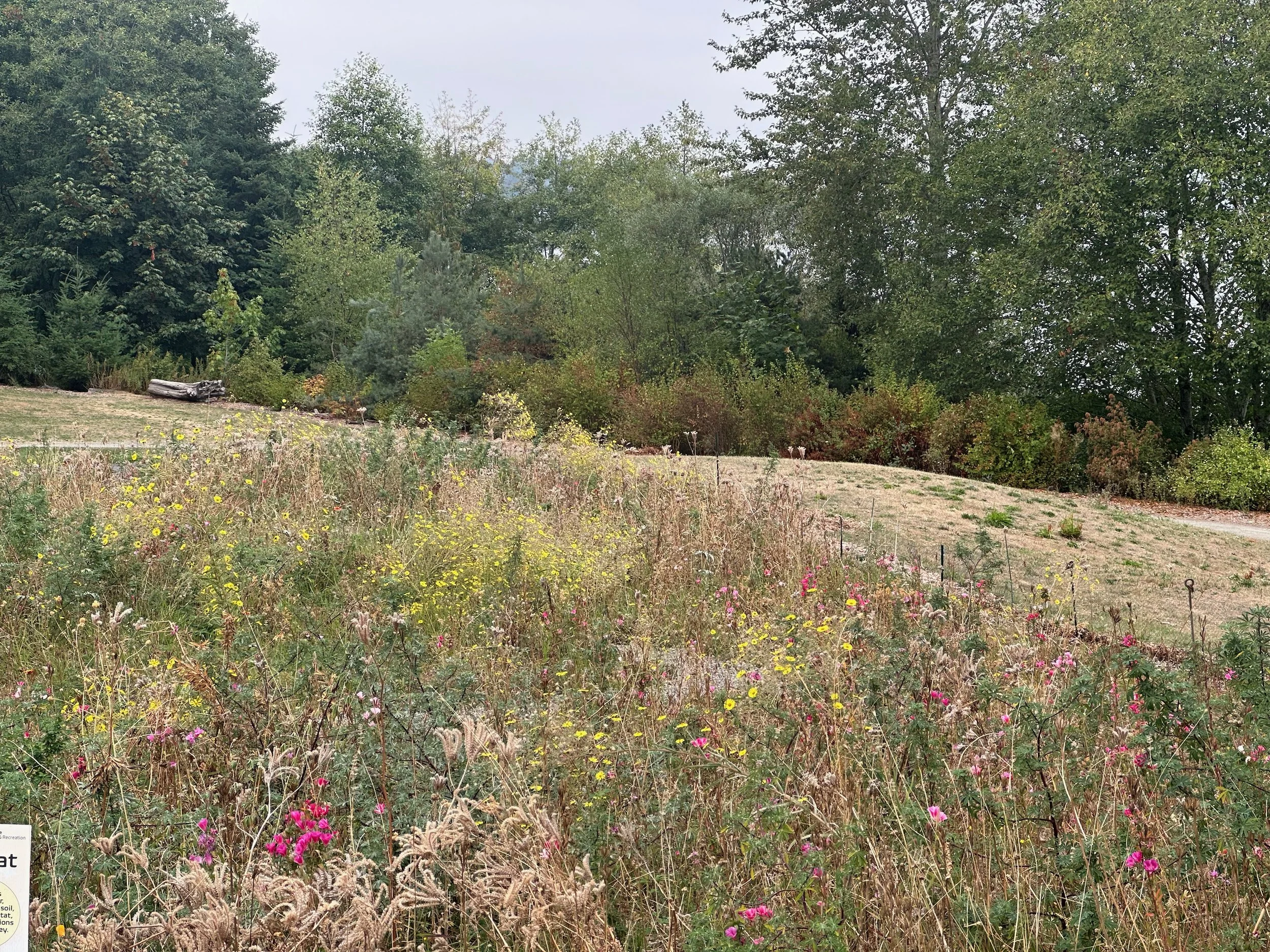
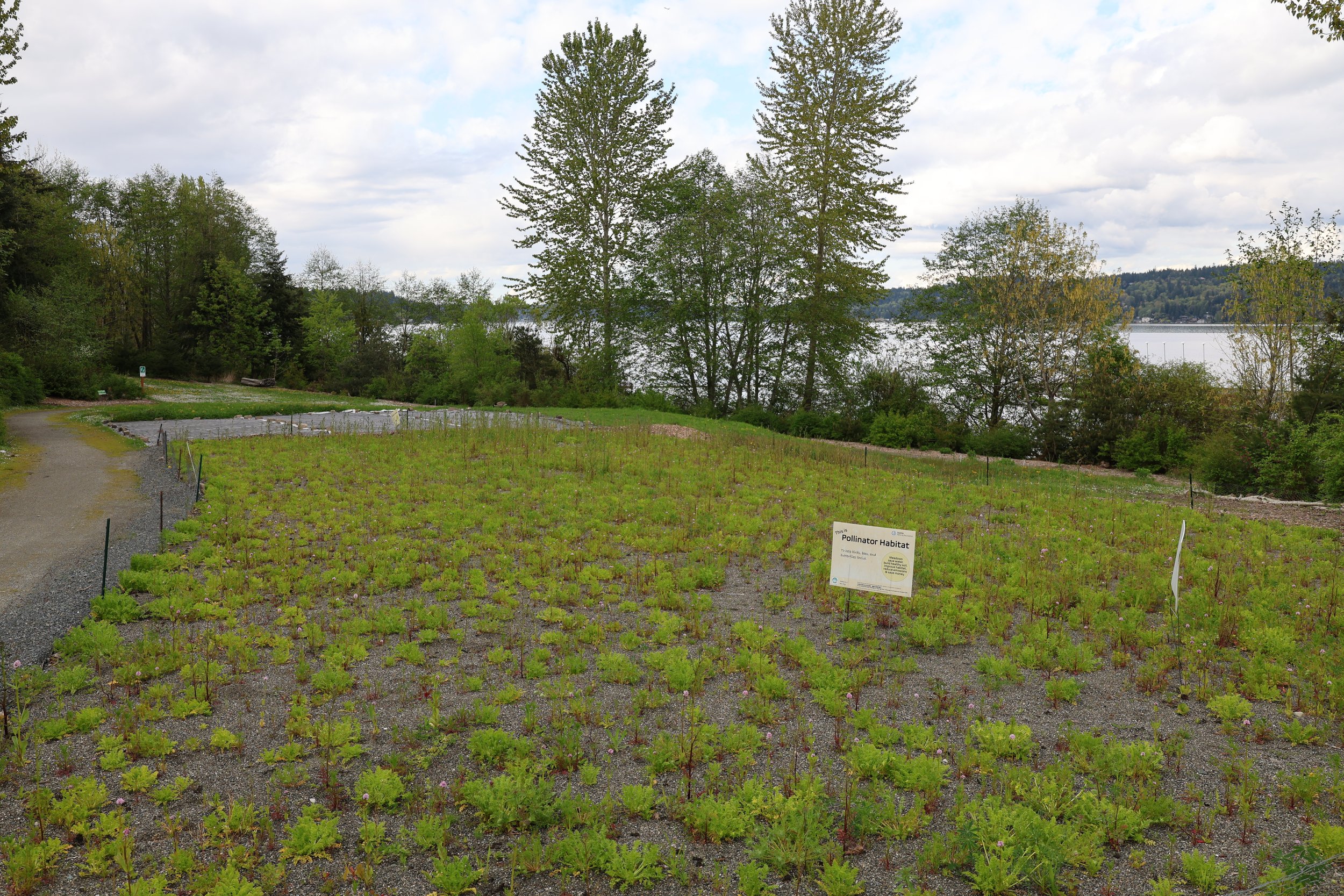
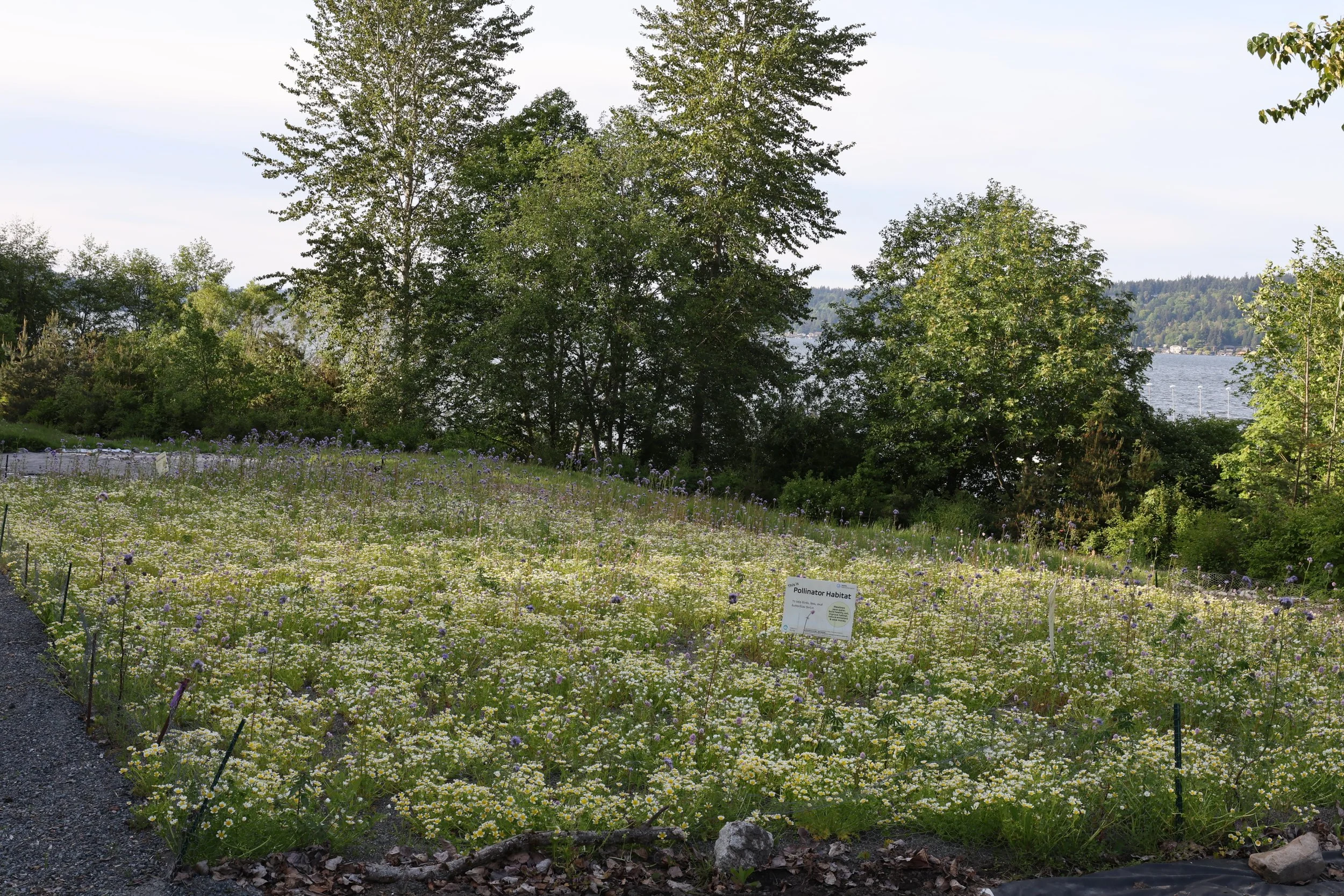
Year one of growth has proved very successful with a flowering season starting in April with multiple successions, lasting well into October. Next year will have more evergreen cover once the grasses and perennials are more established.
Weeding has been easy and low-key, requiring under 10 hours in the first year for 3,600 sq. ft. This is probably the most challenging aspect of establishing a meadow garden from seed - in fact it’s been easy. We’ve doubled the meadow in Fall 2025 and are expanding further. General strategies of cutbacks, overseeding, and selective removals of plants will help us create a dynamic and diverse planting that serves the people with much more interest than a lawn provides, and diverse and extensive resources for insects and birds.
Visit the Magnuson Meadow by following the trail at the north end of Sail Sand Point that heads west - follow the path around the lawn until you reach the meadow.
Thanks to Dean Drugge for the incredible hard work - he is an entire work party, and super knowledge from decades of restoration work. Thanks to Magnuson Park, Green Seattle Partnership, and Magnsuon Environmental Stewardship Alliance for ongoing support, trust, and materials and seeds to make this happen.
Landscape Construction by Dean Drugge and Jonathan Hallet